Helping Drivers Back To Work Post Covid-19 Lockdown
Comments Off on Helping Drivers Back To Work Post Covid-19 LockdownDear valued Sherbet Driver,
The last few months have been unprecedented for the London taxi trade. The national Covid-19 lockdown has seen many drivers to follow the government advice and stay at home. I personally made this decision almost 8 weeks ago when I closed all our sites to protect our teams and our drivers.
Following updated guidance from the Government, I feel it is now time to start thinking about the process of helping drivers return to work. I believe every driver has to make his/hers own decision on the right time to return, every drivers circumstances are different – but I want to make it clear the Sherbet team are here to help once you have decided to return to work.
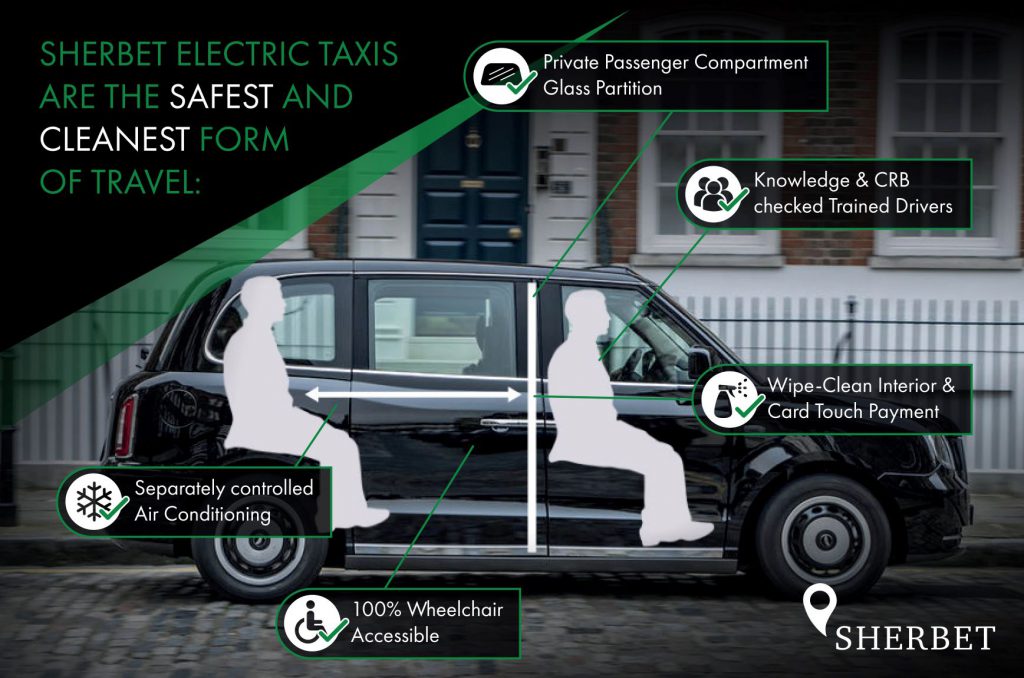
Our team have been looking at way to help safeguard drivers:
A few weeks ago we were fortunate to be visited by a Training Professional from the NHS, she suggested ways to reduce risks to drivers. She also provided training to our staff on the correct procedure on cleaning the taxi, and the correct use of PPE. We are more than happy to pass on this knowledge.
You are more than welcome to make an appointment to attend Dalston for advice on cleaning and if required – let us help reduce the gaps between the two compartments.
We understand the last few months have been financially difficult for drivers:
Many drivers are not working and low work levels for drivers who have been, again we are here to help. Our team have been briefed and have many options to help drivers back to work.
Please do call us (020 3948 3315) and discuss your return to work plan.
We have seen an increased interested In Sherbet Ride:
Over the last few months our sales team have been working extremely hard dealing with an increased number of enquiries from companies who traditionally use private hire. Business are worried about using private hire and are now looking at the safety a black taxi brings. We are anticipating a surge on booking over the next few months.
We continue to be contacted by drivers who do not rent from us; so we also continue to help new drivers. We have electric and diesel taxis available to rent. For rent enquires please talk to our rent team, we are here to help all drivers.
I am sure the next few months will be challenging for all of us, but I have confidence in the trade. London will bounce back.
Stay safe
Asher Moses



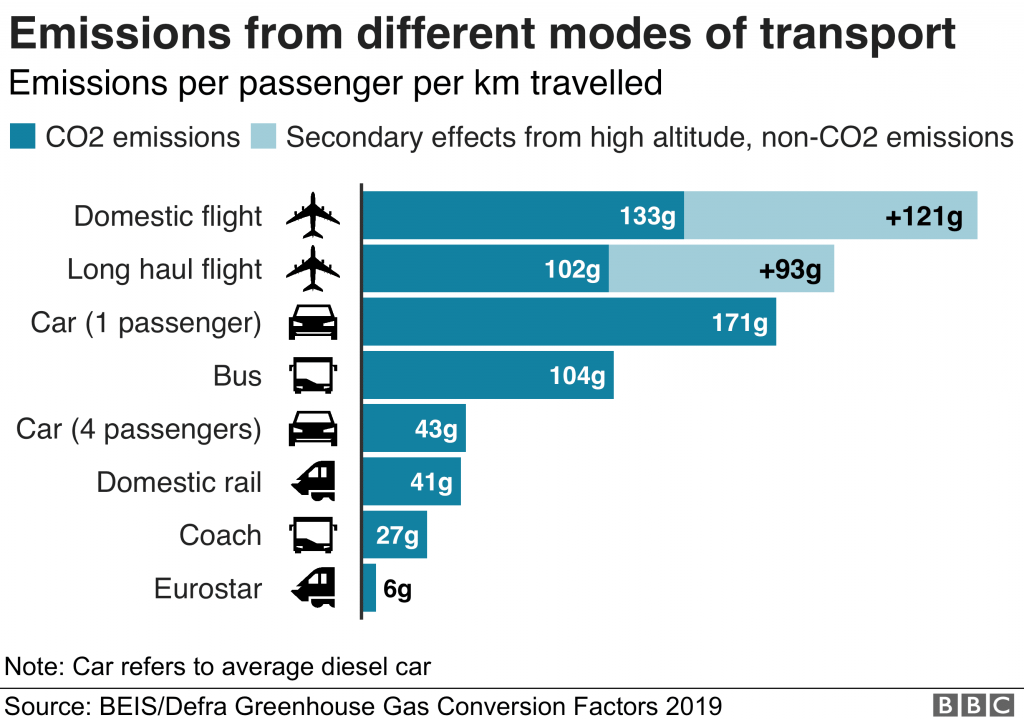
 According to the BBC, flights produce greenhouse gases – mainly carbon dioxide (CO2) – from burning fuel. These contribute to global warming when released into the atmosphere. For example, An economy-class return flight from London to New York emits an estimated 0.67 tonnes of CO2 per passenger, according to the calculator from the UN’s civil aviation body, the International Civil Aviation Organization (ICAO). It is worth mentioning that aviation contributes about 2% of the world’s global carbon emissions, according to the International Air Transport Association (IATA). It also predicts that passenger numbers will double to approx. 8.2 billion in 2037 and that the total number of emissions is set to rise.
 Compearing to flying, train journies are a lot more environmentally friendly. For example, according to EcoPassenger, a journey from London to Madrid would emit 43kg (95lb) of CO2 per passenger by train, but 118kg by plane (or 265kg if the non-CO2 emissions are included). However, the number of emissions generated by using trains and planes varies, depending on several factors, such as if the train is electric, and what way the electricity they use is generated. With regards to diesel trains – carbon emissions can be twice those of electric ones. For example, some diesel trains can emit more than 90g of C02 per passenger per kilometer, compared with about 45g for an electric Intercity 225, figures from the UK Rail Safety and Standards board show.
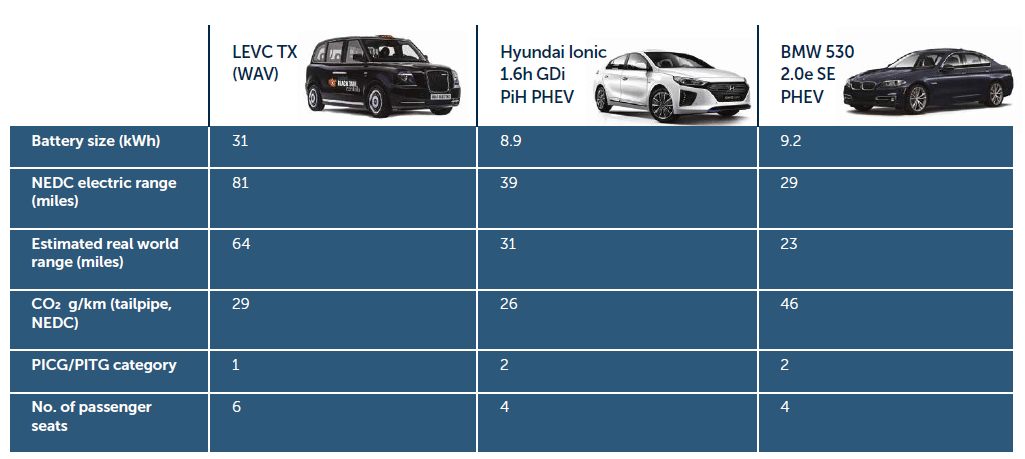
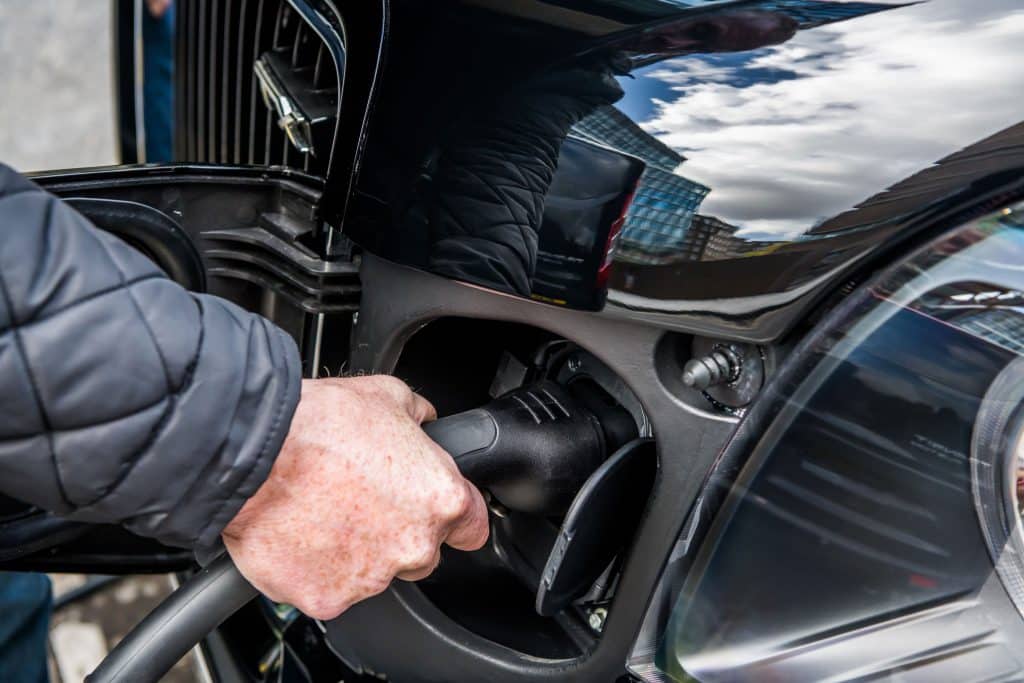 Driving can be better than flying and taking a train – if the car is electric. The popularity of Electric vehicles (EV) is increasing very strongly. According to CarbonFootprint.com In the UK electric vehicles, were ca.14% of the new market in Dec 2019 and by 2035 it’s forecast that all new car sales in Europe will be electric vehicles. London is one of 20 global cities leading on electric vehicles, including taxis. For example, an electric taxi emits 29 g/km CO2 in comparison to a diesel one with 222 g/km emissions of the CO2.